Current Capacity Calculator (external)
Use this Current Capacity Calculator (External) to determine the maximum current a PCB trace can safely carry. Enter the Trace Width, Copper Thickness, and Temperature Rise to calculate the Current Capacity.
Enter the Trace Width, Copper Thickness, and Temperature Rise to calculate the Current Capacity.
Note: (external) refers to External Layer
What is Current Capacity?
Current capacity is the maximum electrical current a conductor can safely carry without exceeding a specified temperature rise.
In printed circuit boards (PCBs), electrical current flows through copper traces that connect electronic components. As current passes through these traces, heat is generated due to the electrical resistance of the copper.
If too much current flows through a trace:
- The trace temperature may rise excessively
- PCB material may degrade or delaminate
- The copper trace may lose reliability or fail
Therefore, determining the correct current capacity ensures that PCB traces operate safely, efficiently, and reliably.
External PCB traces typically have higher current capacity compared to internal traces because they can dissipate heat more easily into the surrounding air.
Uses of Current Capacity Calculation
Current capacity calculations are essential during PCB design to ensure that traces can handle the required current safely.
Common uses include:
- Designing power traces in electronic circuits
- Preventing trace overheating and damage
- Selecting the correct trace width and copper thickness
- Ensuring thermal stability of PCBs
- Optimizing power distribution networks
Accurate current capacity calculation helps engineers design reliable and thermally stable circuit boards.
Current Capacity Calculation
The current capacity of a PCB trace depends mainly on:
- Trace width
- Copper thickness
- Allowable temperature rise
These parameters determine the cross-sectional area of the copper trace and how effectively it can dissipate heat.
External PCB traces can carry more current than internal traces because heat can escape more easily from the outer surface of the board.
Current Capacity Equation:

Where
- I = Current capacity(external) (Amperes)
- T = Allowable temperature rise (°C)
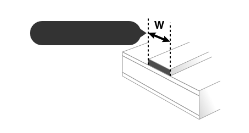
- W = Trace width (Mils)
- C = Copper thickness (Mils)
- A = W × C = Cross-sectional area of the PCB trace
The constant 0.048 represents the empirical coefficient used for external PCB traces, derived from IPC PCB design standards.
Applications of Current Capacity in PCB Design
Current capacity calculations are widely used in PCB and electronic system design.
Power Trace Design
High-Current Electronic Circuits
Thermal Management
Reliable PCB Layout
EMC and System Stability

